
How Collins Tow Dollies Handle Extreme Weather and Road Conditions
October 28, 2026 by Collins Dollies
If tow operators got to choose the conditions, every recovery would be on dry pavement with shoulders a mile wide and not a cloud in sight. Instead, tow operators often find themselves recovering a vehicle during a snowstorm, navigating rain-soaked highways, or working on a gravel shoulder. When conditions get tough, you need equipment that performs – and that’s exactly what we designed Collins tow dollies for. We understand that extreme conditions create serious challenges, so we engineered Collins dollies with durable construction, practical safety features, and dependable vehicle support.
How Do Collins Dollies Perform in Extreme Weather and Road Conditions?
Collins tow dollies support professional towing operations in tough environments, including rain, snow, gravel, and uneven road surfaces. Their durable construction and specialized features, like the Safety Ratchet System and True Positive Camber, help operators safely secure and transport vehicles.
Why Does Extreme Weather Make Professional Towing More Difficult?
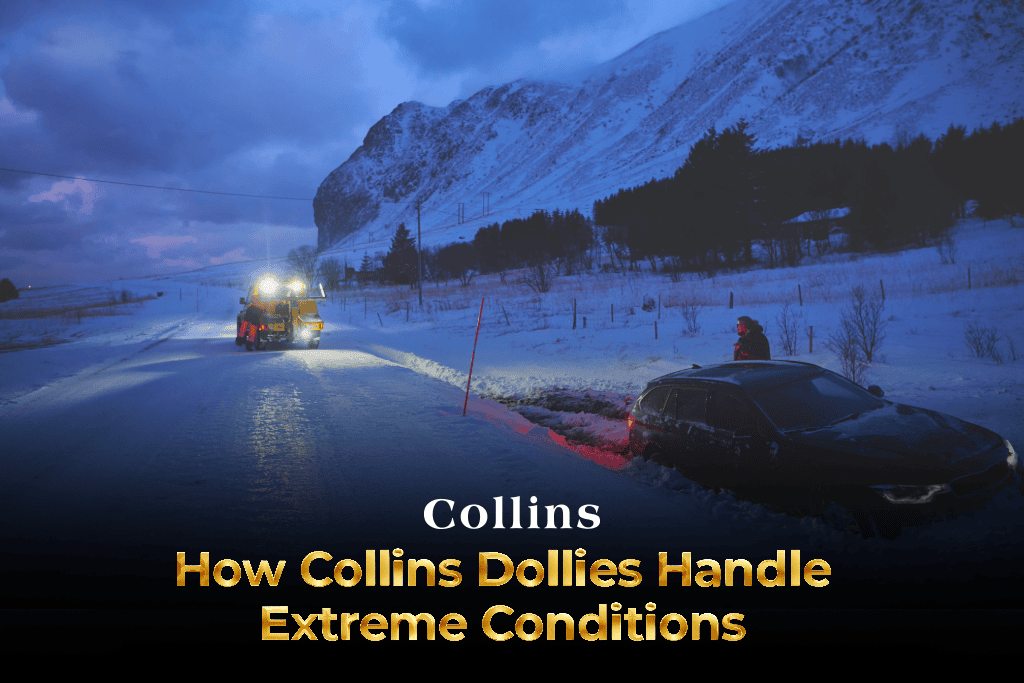
Extreme weather changes every step of a vehicle recovery. Rain, snow, and ice mean less traction, and loose gravel makes it difficult to position equipment. High winds, poor visibility, and freezing temperatures add even more obstacles. These types of extreme weather conditions pose several challenges for towing professionals.
- Reduced traction: Wet, icy, or loose surfaces can compromise the stability of vehicles and equipment.
- Limited visibility: Heavy rain, snow, and fog make roadside operations more dangerous.
- Unpredictable terrain: Potholes, uneven shoulders, and gravel roads make dolly positioning difficult.
- Equipment exposure: Moisture, road salt, and debris accelerate wear.
In our experience, reliable equipment is a game-changer when towing conditions deteriorate. Operators need tools that support safe procedures instead of adding more complexity to an already demanding recovery.
How Do Collins Tow Dollies Handle Snow and Ice?
Winter towing is one of the industry’s toughest challenges. Snow-covered roads, freezing temperatures, and icy shoulders can quickly turn a routine roadside recovery into a complicated operation. Collins tow dollies are built for these extreme conditions.
Secure Vehicle Support During Winter Recoveries
When working in snow or ice, operators face a real risk of slipping while loading a vehicle. Our Safety Ratchet System helps in these conditions by allowing controlled, incremental pauses mid-lift. This prevents the vehicle from crashing back down and gives the operator a chance to regain their footing.
Protecting AWD Vehicles in Winter
Winter recoveries often involve all-wheel-drive vehicles, which require specific towing procedures to prevent drivetrain damage. Our Carrier Dolly systems help operators lift the wheels off the roadway to roll the vehicle onto a flatbed, instead of dragging it and locking the drivetrain.
What Makes Collins Dollies Reliable in Heavy Rain and Wet Road Conditions?
Rain means slippery pavement, standing water, reduced visibility, and wet equipment – all of which make towing more difficult and increase the risk of operator errors. Collins dollies support operators in these extreme conditions with durable components and straightforward operating procedures.
Safety Ratchet System Supports Consistent Setup
When rain makes equipment slippery and visibility drops, operators benefit from the Collins Safety Ratchet System. The SRS serves as a mechanical setup that allows the operator to lift the vehicle without a perfectly dry environment or an ideal pivot angle. It also features an ergonomic all-weather handle so the operator doesn’t have to worry about their hand slipping off during a downpour.
Durable Construction for Demanding Roadside Work
Professional towing equipment sees water, dirt, road debris, and repeated handling throughout its service life. That’s why Collins tow dollies are designed for heavy-duty use. With routine cleaning and inspection, our equipment is built to endure years of commercial towing applications.
Can Collins Tow Dollies Handle Gravel Roads and Uneven Terrain?
Yes. Not every breakdown happens on smooth pavement, and Collins tow dollies are a versatile solution for all types of terrain.
True Positive Camber Supports Dolly Wheel Geometry
Camber is the angle of a wheel relative to vertical. We engineered our dollies with True Positive Camber to keep the dolly wheels tracking straight. This helps operators maintain stability and control on rough and uneven ground.
Careful Positioning on Gravel and Uneven Shoulders
Loose gravel and uneven surfaces complicate loading and increase the risk of equipment shifting. We engineer our dollies with lightweight aluminum frames to make them easier to maneuver in these challenging environments.
Before deploying a dolly system, operators should:
- Evaluate the surface. Check for loose gravel, deep ruts, soft soil, and unstable shoulders.
- Position the tow truck securely. Select the safest available working area and follow established roadside safety procedures.
- Inspect the dolly equipment. Check tires, wheels, frames, and securing components for damage.
- Load and secure the vehicle correctly. Follow Collins operating instructions and the vehicle manufacturer’s towing requirements.
- Confirm the travel route. Avoid terrain that exceeds the equipment’s intended operating conditions.
How Do Collins Dollies Support Extreme Highway Towing Conditions?
Highway towing brings another set of demands. Higher traffic speeds, passing trucks, narrow shoulders, and changing road surfaces leave little to no room for error. Collins Hi-Speed® Dollies are the only dollies approved for highway, freeway, or interstate use.
Reducing Roadside Setup Complications
Highway recoveries demand efficient equipment handling, especially when operators face heavy traffic or poor visibility. This is where clear procedures help operators verify equipment condition, confirm vehicle security, and identify potential problems before entering traffic. At Collins Dollies, we design our towing equipment to support the standardized procedures that help keep operators safe in extreme conditions.
Supporting Damage-Free Vehicle Transport
Modern vehicles feature complex drivetrains, electronic parking brakes, low ground clearance, and specialized suspension systems. Collins Carrier Dolly systems help operators safely move these vehicles off the side of the highway while keeping their wheels off the roadway to prevent damage.
How Should Towing Companies Maintain Collins Dollies After Extreme Weather?
Even the most durable towing equipment needs regular maintenance. We recommend maintenance as a part of every towing company’s routine, especially during seasons with frequent severe weather.
Essential Tow Dolly Maintenance Tips
- Clean equipment after exposure to road salt. Remove salt, mud, and accumulated debris to help limit corrosion.
- Inspect tires and wheels. Check tire pressure, tread condition, wheel damage, and other signs of wear.
- Check moving components. Inspect ratchets, pivots, and other mechanical parts to make sure they’re operating properly.
- Follow lubrication requirements. Use the manufacturer’s recommended lubricants and maintenance intervals.
- Examine structural components. Look for cracks, deformation, corrosion, or damage after difficult recoveries.
- Replace worn parts promptly. Remove equipment from service when damage compromises safe operation.
Why Does the Right Tow Dolly Matter for Year-Round Fleet Performance?
Extreme weather affects more than individual recoveries. It also affects a towing company’s productivity, operating costs, equipment availability, and customer satisfaction. Choosing the right towing equipment helps fleet owners address multiple operational priorities.
- Operator efficiency: Familiar equipment and standardized procedures support consistent recoveries.
- Vehicle protection: Proper dolly configurations help reduce the risk of drivetrain and vehicle damage.
- Equipment longevity: Durable construction and preventive maintenance support long-term fleet use.
- Operational flexibility: Suitable dolly systems help operators respond to different vehicle types and roadside situations.
- Customer confidence: Professional equipment and careful vehicle handling demonstrate a commitment to quality service.
In our experience, towing companies benefit when they evaluate equipment based on the actual conditions their operators encounter. A fleet that regularly handles winter recoveries, rural roadside calls, and modern AWD vehicles needs equipment that consistently meets those demands.
Choose Collins Dollies for Demanding Towing Conditions
Rain, snow, gravel, and highway hazards create difficult conditions for tow operators. With the right equipment, however, operators can approach those situations with confidence, consistency, and control.
At Collins Dollies, we understand the demands of professional towing. Our equipment combines practical engineering, durable construction, and specialized features that support safe vehicle handling in all weather and roadside conditions. Whether you’re upgrading your fleet or evaluating towing options for difficult recoveries, contact your authorized dealer to find the right solution for your operation.
Frequently Asked Questions
Can Collins tow dollies handle snow and icy roads?
Yes. Collins tow dollies support professional towing operations in winter conditions, including snow and freezing temperatures. Their durable construction and vehicle-securing features help operators handle challenging recoveries.
Are Collins dollies suitable for towing in heavy rain?
Yes. Collins dollies support towing in wet weather when road conditions allow for safe travel. Features like the Safety Ratchet System help operators secure compatible equipment during setup.
Can you use Collins tow dollies on gravel roads?
Yes. Collins dollies can be used for towing on gravel surfaces, but operators should evaluate the terrain before deploying the equipment. Always follow the manufacturer's operating limits and choose another recovery method if conditions exceed the equipment's capabilities.