
Few parts of the job test a towing operator like towing in dark and rainy conditions. Visibility drops, traction changes, and traffic becomes less predictable. Yet recoveries still have to be completed—often on the shoulder of busy roadways with water pooling underfoot and glare bouncing off every surface. For towing companies, employee safety in these moments depends on preparation, procedures, and the reliability of the equipment operators use every day.
Below are key safety practices that help protect towing professionals when conditions are at their worst, along with guidance on selecting equipment that supports safer and more efficient operations.
 Why Darkness and Rain Increase Risk for Towing Operators
Rain at night creates unique hazards. Headlight glare reflects off wet pavement, making it harder to judge distance and speed. Lane markings fade, debris is harder to see, and braking distances increase for passing vehicles. For towing operators working outside the cab, the biggest risks include reduced visibility to oncoming traffic, slick surfaces, and limited reaction time for drivers approaching the scene. Understanding these heightened risks is the first step toward managing them.
Tips for Towing in Dark and Rainy Conditions Safely:
Plan the Scene Before Stepping Out of the Truck
When towing in dark and rainy conditions, safety begins before exiting the vehicle. Operators should slow their approach, assess traffic flow, and look for hazards such as standing water, blind curves, and narrow shoulders. Position the truck to create as much working space as possible and avoid downhill areas where water may run through the work zone.
If conditions allow, relocating the disabled vehicle to a safer area before completing the hookup can significantly reduce exposure to traffic and weather-related risks.
Maximize Visibility From Every Angle
Being seen is critical during nighttime and rain-heavy recoveries. High-visibility, reflective outerwear designed for wet conditions should always be worn. Headlamps and powerful handheld flashlights help operators see clearly without sacrificing situational awareness.
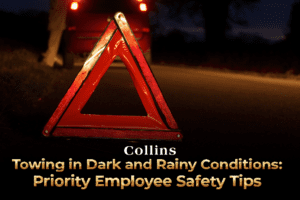
Vehicle lighting should be used intentionally. Amber strobes, work lights, and hazard flashers help establish a clear safety zone, while cones or reflective triangles should be placed farther back than usual to account for reduced braking and reaction time on wet roads.
Reduce Time Spent in the Danger Zone
The less time an operator spends exposed on the roadside, the safer the job. Standardized setup procedures help crews work efficiently and avoid unnecessary movement. Keeping tools organized and easily accessible prevents repeated trips around the truck in slick conditions.
Operators should work from the traffic-safe side whenever possible and remain aware of passing vehicles at all times. When multiple employees are present, assigning clear roles—such as traffic monitoring versus equipment handling—can further reduce risk.
Prevent Slips, Strains, and Equipment Failures
Wet conditions dramatically increase the likelihood of slips and falls. Slip-resistant footwear, gloves with reliable grip, and deliberate movement all play an important role in injury prevention. Equipment inspections become even more critical in the rain, as water can hide wear, reduce friction, and compromise performance.
Using equipment that functions smoothly and predictably helps operators maintain control and avoid sudden movements that can cause injury.
Choose Equipment that Enhances Safety
In poor weather and low light, dependable equipment isn’t just about efficiency—it’s about safety. Equipment that loads smoothly, tracks consistently, and reduces the need for improvisation helps limit operator exposure and stress during recovery.
That’s why many professionals recommend Collins Dollies. Designed for real-world towing challenges, Collins Dollies provide stability, control, and ease of use that are especially valuable when towing in dark and rainy conditions. Reliable towing equipment helps operators complete recoveries faster, with fewer risks and fewer opportunities for mistakes.
Promote a Culture of Safety and Training
Even the best tools work best when paired with strong safety habits. Regular training on night and rain operations, clear guidelines for scene assessment, and a culture that supports pausing or relocating unsafe recoveries all contribute to better outcomes. Operators should feel empowered to prioritize safety over speed when conditions demand it.
Safer Operations Start With the Right Equipment
Dark, rainy calls are an unavoidable part of the towing industry—but injuries don’t have to be. By prioritizing visibility, scene control, efficient procedures, and dependable equipment, towing companies can better protect their teams in the most challenging conditions.
For companies seeking towing equipment that supports operator safety and performs reliably when conditions are at their worst, Collins Dollies is a proven choice for safer, more confident recoveries during towing in dark and rainy conditions.
Leave a Reply